
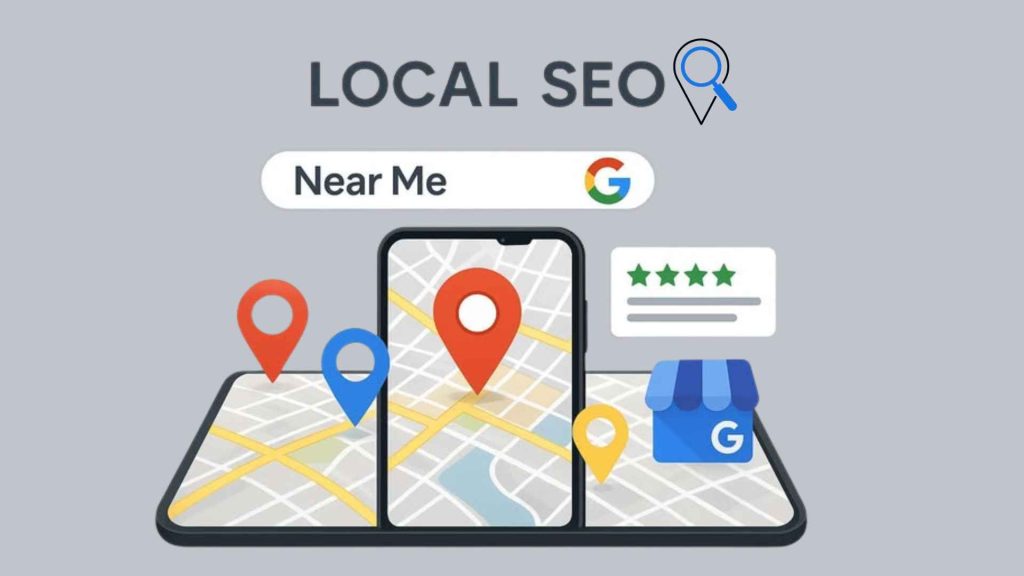
Attracting customers from your target locations requires more than offering good products or services. Your business also needs to be visible when potential customers research local providers online. For Kenyan businesses, Google Search and Maps offer valuable opportunities to reach people looking for services within specific towns, neighborhoods, and counties.
Local SEO in Kenya helps improve your business’s visibility in these location-based searches. It involves optimizing your website, Google Business Profile, and other online business information to strengthen your presence in local results. Here are the practical steps you can take to improve your local search visibility and attract more relevant enquiries.
Key Takeaways
- Local SEO helps your business appear in searches from people looking for products or services in specific locations.
- Google uses relevance, distance, and prominence as the main factors for local search rankings.
- A complete Google Business Profile should work alongside a well-optimized website.
- Consistent business information, genuine reviews, and relevant local links help establish trust.
- Tracking calls, website enquiries, and other customer actions helps measure the value of your local SEO campaign.
What Is Local SEO?
Local SEO is the process of improving your business’s visibility in search results for location-based queries. It helps search engines understand what your business offers, where it operates, and which customers it serves.
Unlike standard SEO, which may target audiences across different countries or regions, local SEO focuses on searches with a geographical connection. A business can target searches that include a specific location, such as “digital marketing agency in Nairobi,” or searches where the location is implied, such as “accountant near me.”
Local SEO covers several areas of optimization, including:
- Google Business Profile management
- Location-based keyword research
- Website and location page optimization
- Consistent business information across online directories
- Customer reviews and reputation management
- Local backlinks and business mentions
- Mobile usability and website performance
These activities help improve your visibility across Google Search and Maps. They also make it easier for potential customers to find accurate information and contact your business.
How Does Google Rank Local Businesses?
Google evaluates local businesses using three main factors: relevance, distance, and prominence. Each affects how well your business matches a local search.
1. Relevance
Google looks at how well your business matches a search query. Your business category, listed services, and website content help establish what your business offers.
For example, if you provide social media management services, make sure your profile and website describe these services clearly. Use accurate categories and specific service descriptions so customers can easily identify what you offer.
2. Distance
Your business’s location in relation to the searcher also affects local results. Search results may favor businesses closer to the location specified in a query. A business in Kilimani, for instance, may have an advantage over one in Ruiru for a search targeting Kilimani.
You can’t control the searcher’s location, so focus on accurately identifying your business address and the areas you serve. Listing locations where you don’t operate won’t guarantee better rankings.
3. Prominence
Prominence relates to how established your business is online and offline. Google considers factors such as customer reviews, links from other websites, and information about your business across the web. You can strengthen your online presence by earning genuine customer reviews, getting relevant backlinks, and keeping your business information consistent across reputable directories.
How to Improve Local SEO in Kenya
Improving local search visibility requires consistent work across your Google Business Profile, website, and other online platforms.
1. Optimize Your Google Business Profile
Your Google Business Profile is one of the main assets for local search visibility. It allows your business to appear on Google Search and Maps with important details such as its location, phone number, opening hours, website, and customer reviews.
Start by claiming and verifying your profile. Then check that all business information is accurate and complete. Pay attention to:
- Business name: Use the name customers recognize and that appears on your real-world branding.
- Primary category: Select the category that most accurately describes your main business activity.
- Business address: Provide the correct premises address if customers visit your location.
- Service areas: List the areas you serve if your business travels to customers.
- Contact details: Use a working phone number and website address.
- Business hours: Keep normal and special opening hours updated.
- Photos: Upload real images of your premises, products, staff, or completed work.
Review your profile regularly to correct outdated information and respond to customer feedback.
2. Conduct Local Keyword Research
Keyword research helps you understand the terms potential customers use when searching for businesses in your area. Start with your main products or services, then identify the locations you want to target. Combine these terms to find relevant local search opportunities.
Your research should cover different types of local searches, including:
- Service and location combinations
- Product and location combinations
- “Near me” searches
- Local service questions
- Searches related to specific customer needs
Use tools such as Google Keyword Planner, Google Search Console, and Google autocomplete to identify relevant search terms.
Pay attention to search intent. Someone searching for “plumbing services in Nairobi” may be looking for a company to hire, while someone searching for “how to fix a leaking tap” is looking for information.
Prioritize keywords that match your services and the customers you want to reach. You do not need to target every location or variation of a search phrase.
3. Optimize Your Website for Local Searches
Your website supports your local SEO efforts by providing more information about your business, services, and operating locations. Start with the pages that matter most to your customers. Your homepage should explain what your business does and identify its main operating location where relevant.
Service pages should describe each offering clearly, including the areas you serve. Include local keywords naturally in page titles, headings, descriptions, and relevant sections of the content. Your website should also display consistent business details, including:
- Business name
- Physical address or service area
- Phone number
- Email address
- Opening hours, where applicable
Make your contact information easy to find. A visitor shouldn’t have to search through several pages to discover how to reach your business. Include clear calls to action such as calling your business, requesting a quote, booking an appointment, or submitting an enquiry.
4. Create Location-Specific Landing Pages
If your business serves multiple towns or neighborhoods, location pages can help you target relevant searches in those areas. A location page should explain the services you provide in a particular area and give visitors useful information about working with your business.
Include details such as:
- Services available in the area
- Relevant service information
- Your actual coverage and availability
- Local customer feedback or completed projects, where available
- Contact details and a clear enquiry option
Avoid creating several pages that only replace one town name with another. Pages with nearly identical content provide little additional value to visitors. Each location page should have a clear purpose and useful information relevant to the area. Only target locations where your business has a genuine service presence. If you operate from one physical location, a strong main service page may be more useful than creating pages for every nearby neighborhood.
5. Maintain Consistent Business Information Across the Web
Your business name, address, and phone number are commonly referred to as NAP information. Consistency across your website, Google Business Profile, and other online listings helps customers identify your business.
Check your existing listings on relevant platforms and directories. Correct outdated phone numbers, old addresses, spelling variations, and duplicate entries. Other relevant platforms for your business may include local business directories, industry associations, professional directories, and established marketplace listings.
Don’t submit your business information to every directory you find. Prioritize reputable platforms that are relevant to your industry or local market. Keep your contact details consistent wherever your business appears. If your address or phone number changes, update the important listings promptly.
6. Build a Strong Customer Review Profile
Customer reviews help potential buyers assess your business before contacting you. They also contribute to your online reputation and local search prominence. Develop a consistent process for requesting honest feedback from customers after completing a purchase or service.
You can share your Google review link through email, WhatsApp, or other customer communication channels. Make the process simple and avoid asking customers to leave only positive reviews.
Respond to feedback professionally. Thank customers for positive reviews and address complaints without becoming defensive. Never purchase reviews, create fake accounts to rate your business, or offer incentives in exchange for positive ratings. These practices violate Google’s review policies and can damage customer trust.
7. Earn Relevant Local Backlinks
Backlinks are links from other websites pointing to your website. They can help search engines discover your content and understand your site’s authority. For local SEO, links from relevant and credible websites can also strengthen your connection to a particular industry or community.
Look for legitimate opportunities to earn links through:
- Local business associations
- Industry organizations
- Relevant Kenyan publications
- Community initiatives and events
- Business partnerships
- Useful resources that other websites may reference
You can also publish original research, practical guides, and industry insights that other websites may find useful enough to reference. Avoid buying large volumes of low-quality links or participating in link schemes. The quality and relevance of a link matter more than the number of links you acquire.
8. Add Local Business Schema Markup
Schema markup is structured data added to your website to help search engines understand the information on a page. LocalBusiness schema can communicate details such as your business name, address, opening hours, and other relevant information.
You can use a suitable LocalBusiness subtype that describes your business accurately. For example, a restaurant, dentist, or digital marketing company may use a more specific type where supported.
Make sure the information in your structured data matches the details displayed on your website and other business platforms. Schema markup doesn’t guarantee higher rankings or special search result features. It supports search engines’ understanding of your business information.
If you manage several physical locations, each location should have accurate information and appropriate structured data on its relevant page.
9. Improve Mobile Experience and Website Speed
Many local searches happen on mobile devices. Your website should make it easy for visitors to find information and contact your business using a phone. Check that your pages display correctly on different screen sizes. Navigation, contact buttons, forms, and other important elements should be easy to use without excessive scrolling or zooming.
Also review your website’s loading performance. Large images, unnecessary scripts, poor hosting, and inefficient code can make pages slow. Use Google’s PageSpeed Insights to identify performance issues and prioritize improvements.
How to Track Local SEO Performance
Tracking helps you understand whether your local SEO activities are improving visibility and generating useful customer enquiries. Don’t rely on one ranking position to measure success. Local search results can vary depending on the searcher’s location, device, and query.
Google Business Profile Performance
Your verified Business Profile provides performance information about how customers discover and interact with your listing. Depending on the reporting features available, you can monitor:
- Searches that displayed your profile
- Profile views
- Calls
- Website clicks
- Direction requests
- Other available customer interactions
Review these metrics over time to identify changes in customer activity.
Google Search Console
Google Search Console helps you monitor how your website performs in organic search results. Use it to review:
- Search queries bringing visitors to your website
- Impressions and clicks
- Average search positions
- Pages receiving organic traffic
- Search performance for relevant location-based terms
Filter the data to identify local queries and the pages attracting those searches.
Google Analytics
Google Analytics 4 can help you understand what visitors do after reaching your website. Monitor relevant actions such as contact form submissions, phone link clicks, WhatsApp clicks, bookings, and other conversion events. Where possible, connect these actions to qualified enquiries and actual sales. A rise in website traffic is useful, but the commercial value of that traffic matters more.
Common Local SEO Mistakes Kenyan Businesses Should Avoid
Some local SEO practices can waste resources or create problems with your online visibility.
Creating Fake Business Locations
Don’t create Google Business Profiles for addresses where your business doesn’t operate. Fake offices and virtual locations that do not meet Google’s eligibility requirements can lead to profile suspension. Target the locations you genuinely serve and provide accurate business information.
Keyword Stuffing Location Pages
Repeating the same town name throughout a page does not make it more relevant. Write naturally and provide useful information about your services and coverage.
Creating Thin or Duplicate Pages
Publishing many pages with almost identical content can weaken your website’s quality. Each location page should offer information that is genuinely useful to visitors in that area.
Buying Fake Reviews
Fake reviews can mislead customers and violate platform policies. Build your reputation through genuine customer experiences and honest feedback.
Ignoring Website Technical Issues
Broken pages, poor mobile usability, slow loading times, and indexing problems can make it harder for customers and search engines to use your website. Check your important pages regularly and resolve technical issues as they arise.
Expecting Immediate Rankings
Local SEO requires ongoing work. Your results depend on your competition, business location, website condition, and the strength of your online presence.
Avoid agencies or service providers promising guaranteed Google Maps positions. No one can guarantee a specific local ranking.
Should You Hire a Local SEO Agency in Kenya?
You can manage some local SEO tasks internally, particularly if you have one business location and the time to maintain your online presence. However, managing several locations, improving website performance, conducting keyword research, building local authority, and tracking conversions can require specialist knowledge and consistent effort.
A local SEO agency can help you develop a strategy around your business goals and target locations. Its work may include:
- Local keyword research
- Google Business Profile optimization
- Website and location page optimization
- Local citation management
- Review and reputation management
- Technical SEO
- Local link building
- Performance monitoring and reporting
Before hiring an agency, ask how it measures results and which activities its monthly fee covers. Review its reporting process and make sure it can explain how the work supports your business objectives.
At Artly Digital Marketing, we provide SEO services that help businesses improve search visibility, attract relevant website traffic, and generate more enquiries. Our approach combines keyword research, content optimization, technical improvements, and ongoing performance monitoring.
Partner with Artly Digital for ROI-Driven Local SEO Services
Local SEO helps Kenyan businesses reach customers searching for products and services in their areas. A strong strategy connects your Google Business Profile with an optimized website, consistent business information, genuine customer reviews, and relevant local links.
Start by identifying the locations and services you want to target. Improve the pages and business listings that support those searches, then monitor how customers find and interact with your business.
If you want to improve your business’s visibility on Google Search and Maps, contact Artly Digital Marketing to discuss a local SEO strategy built around your services and target locations.
FAQs
What is local SEO in Kenya?
Local SEO is the process of improving a business’s visibility in location-based searches on Google Search and Maps. It helps businesses reach customers looking for nearby products or services.
How do I get my business on Google Maps in Kenya?
Create or claim an eligible Google Business Profile, enter accurate business information, and complete Google’s verification process. Keep the profile updated and connect it to your website.
How long does local SEO take to work?
Local SEO timelines vary depending on competition, website condition, location, and the work required. Some improvements may appear within a few months, while stronger and more consistent results can take longer.
Is local SEO free?
You can complete many local SEO activities without paying for tools or agency services. However, professional support, website improvements, content creation, and ongoing optimization may involve costs.
Can a business rank on Google Maps without a website?
Yes. An eligible business can appear on Google Maps with a verified Google Business Profile even without a website. However, having a well-optimized website gives customers more information and supports your wider SEO strategy.