
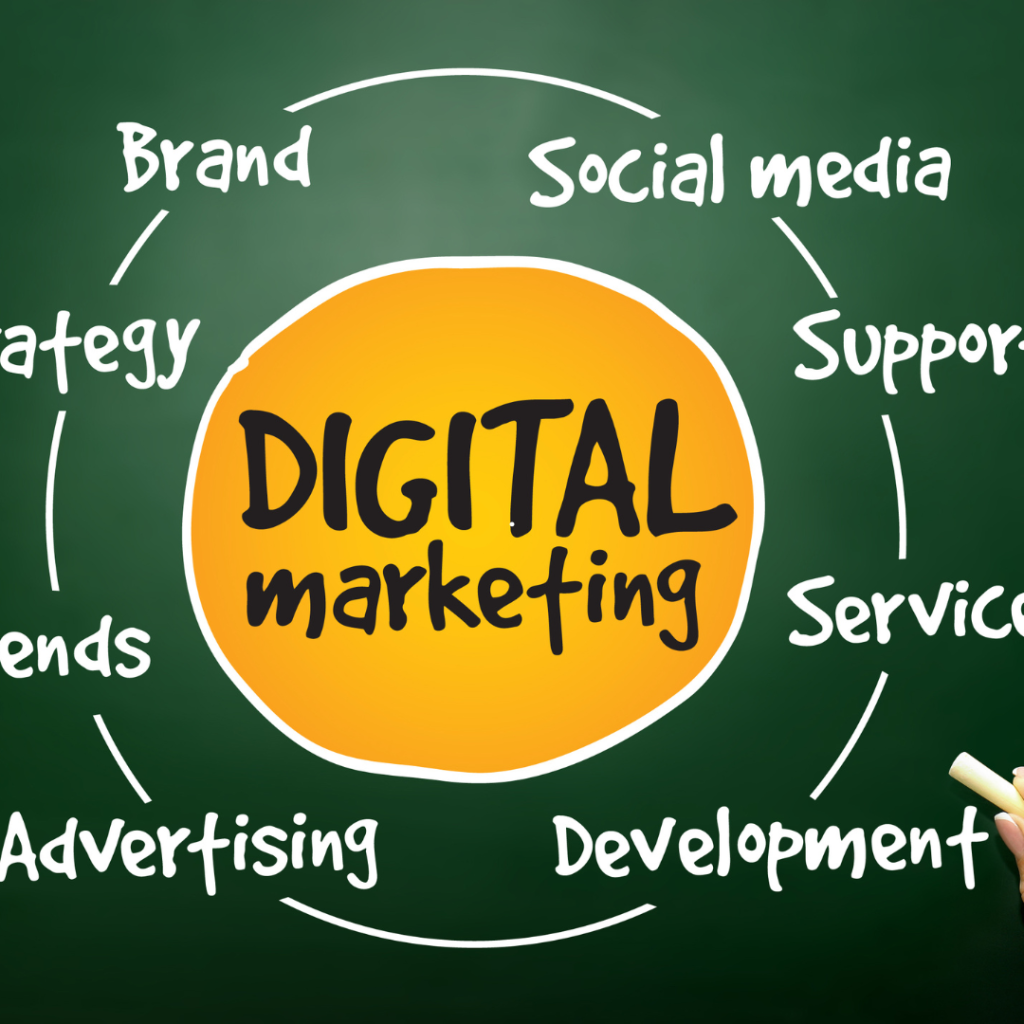
The way businesses grow has fundamentally changed. Customers no longer discover brands through word of mouth alone or a billboard on the side of the road. They search, scroll, compare, and decide all online, often within minutes.
For businesses that want to grow in today’s environment, digital marketing is not optional. It is the engine behind customer acquisition, brand visibility, and long-term revenue. The question is no longer whether to invest in digital marketing, but which solutions will deliver the greatest return for your specific business.
In this article, we break down the top 10 digital marketing solutions for business growth: what they are, why they work, and how to use them effectively whether you are a small business in Kenya, a growing company across Africa, or a brand competing on the global stage.
Also Read: How Website Design Impacts Your SEO Rankings
1. Search Engine Optimisation (SEO)
SEO is one of the most powerful and cost-effective digital marketing solutions available to any business. It is the process of improving your website so it ranks higher in search engine results pages (SERPs) making it easier for potential customers to find you when they search for your products or services.
Unlike paid advertising, which stops the moment your budget runs out, SEO builds compounding value over time. A well-optimised website continues to attract high-quality organic traffic long after the initial work is done.
SEO covers several interconnected areas:
- On-page SEO: optimising your content, headings, meta tags, and keyword usage
- Technical SEO: improving site speed, mobile-friendliness, and site structure
- Off-page SEO: building authority through backlinks and brand mentions
- Local SEO: ensuring your business appears in local and map-based search results
For businesses targeting customers in specific cities or regions such as Nairobi, Lagos, Johannesburg, or beyond local SEO is especially valuable. It connects you with high-intent searchers who are ready to act.
2. Content Marketing
Content marketing is the foundation on which all other digital marketing solutions are built. It involves creating and distributing valuable, relevant content blog posts, articles, videos, infographics, guides, and more that attracts, educates, and converts your target audience.
Great content does several things at once. It improves your SEO rankings, establishes your brand as an authority in your industry, builds trust with potential customers, and gives your social media and email marketing campaigns something meaningful to share.
The businesses that invest in content marketing consistently see stronger long-term results because they are solving real problems for real people. When your content answers the questions your audience is already asking, they come to you rather than the other way around.
Effective content marketing includes:
- Regular blog posts targeting relevant keywords
- In-depth guides and resources that establish authority
- Video content that engages audiences on social platforms
- Case studies and testimonials that build credibility and social proof
Consistency is key. A content calendar that maps out topics, formats, and publishing dates ensures your brand stays visible and relevant.
3. Social Media Marketing
Social media has become one of the most powerful channels for building brand awareness, engaging with customers, and driving traffic to your website. With billions of active users across platforms like Facebook, Instagram, LinkedIn, X (formerly Twitter), TikTok, and YouTube, the opportunity to reach your audience is enormous.
But social media marketing is most effective when it is strategic rather than sporadic. Posting randomly without a clear plan rarely produces meaningful results. Instead, a focused approach choosing the right platforms for your audience, creating content tailored to each channel, and engaging consistently is what builds genuine growth.
Social media marketing works best when it:
- Reflects a consistent brand voice and visual identity
- Prioritises engagement over broadcasting responding to comments, asking questions, and starting conversations
- Uses a mix of organic content and targeted paid social ads
- Tracks performance metrics such as reach, engagement rate, and click-throughs to refine strategy over time
For B2B businesses, LinkedIn is often the most valuable platform. For consumer-facing brands, Instagram and Facebook tend to deliver the strongest results. The right choice depends entirely on where your audience is most active.
4. Pay-Per-Click Advertising (PPC)
While SEO is a long-term investment, pay-per-click advertising delivers immediate visibility. PPC allows businesses to place ads at the top of search engine results and across digital platforms, paying only when someone clicks on the ad.
Google Ads is the most widely used PPC platform, allowing businesses to appear at the top of search results for high-intent keywords. Meta Ads (Facebook and Instagram) offer powerful audience targeting based on demographics, interests, and behaviours. LinkedIn Ads are particularly effective for B2B businesses targeting professionals and decision-makers.
The real power of PPC lies in its precision. You can target specific locations, age groups, interests, search terms, and even the time of day your ads appear. This level of control makes it possible to reach exactly the right people with the right message at the right moment.
PPC works best when paired with:
- Well-crafted ad copy that speaks directly to the searcher’s intent
- High-converting landing pages that match the promise made in the ad
- Ongoing testing and optimisation to improve click-through and conversion rates
- Clear budget management to maximise return on ad spend
For businesses launching a new product, running a seasonal promotion, or entering a new market, PPC is often the fastest path to measurable results.
5. Email Marketing
Email marketing remains one of the highest-return digital marketing solutions available. For every dollar invested, email marketing consistently delivers some of the strongest ROI of any channel and that holds true for businesses of all sizes.
The reason is simple: your email list is an audience you own. Unlike social media followers who can disappear if an algorithm changes, your subscribers have given you direct permission to communicate with them. That relationship is incredibly valuable.
Effective email marketing goes well beyond sending newsletters. It includes:
- Welcome sequences that introduce new subscribers to your brand
- Lead nurturing campaigns that guide prospects toward a purchase decision
- Promotional emails that drive traffic and sales during key moments
- Re-engagement campaigns that bring inactive subscribers back
- Personalised content that speaks to different segments of your audience
With the right email marketing strategy, you can turn a modest list into a consistent revenue stream keeping your brand top of mind and your customers coming back.
6. Video Marketing
Video has become the dominant content format across virtually every digital platform. From YouTube and TikTok to Instagram Reels and LinkedIn, video content consistently generates higher engagement, longer watch times, and stronger brand recall than any other format.
For businesses, video marketing is an opportunity to humanise your brand, demonstrate your expertise, showcase your products or services, and connect with audiences in a way that text simply cannot replicate.
Video content for business growth can take many forms:
- Explainer videos that break down complex products or services
- Behind-the-scenes content that builds authenticity and trust
- Customer testimonials and case study videos that provide social proof
- Educational content that positions your brand as a go-to resource
- Short-form videos for social media that capture attention quickly
You do not need a large production budget to get started. Many of the most effective business videos are filmed simply with a smartphone. What matters most is clarity, authenticity, and delivering genuine value to your viewer.
7. Influencer and Partnership Marketing
Influencer marketing has grown significantly as a business growth strategy and for good reason. When a trusted voice recommends your product or service to their engaged audience, the conversion power is far greater than traditional advertising.
This does not necessarily mean working with celebrities or mega-influencers. In fact, micro-influencers with smaller but highly engaged, niche audiences often deliver better results at a fraction of the cost. For Kenyan and African businesses, working with local influencers who understand the culture and context of your market can be especially powerful.
Effective influencer and partnership marketing involves:
- Identifying influencers whose audience aligns with your target customer
- Building genuine partnerships rather than one-off transactional arrangements
- Co-creating content that feels authentic to both the influencer and your brand
- Tracking results through unique discount codes, affiliate links, or campaign-specific metrics
Beyond influencers, strategic partnerships with complementary businesses can also open new audiences cross-promotions, joint webinars, or co-branded content campaigns are all worth exploring.
8. Website Optimisation and Conversion Rate Optimisation (CRO)
Attracting traffic to your website is only half the battle. If visitors arrive but leave without taking action, the investment in every other digital marketing channel is undermined. That is where website optimisation and conversion rate optimisation (CRO) come in.
CRO is the process of improving your website so that a higher percentage of visitors complete a desired action whether that is making a purchase, filling in a contact form, booking a call, or subscribing to your email list.
Key areas of website and CRO improvement include:
- Page load speed – slow websites lose visitors before the page even loads
- Mobile optimisation – the majority of web traffic now comes from mobile devices
- Clear calls to action that guide visitors toward the next step
- Trust signals such as testimonials, certifications, and case studies
- Simplified navigation and user experience that reduces friction
- A/B testing different headlines, layouts, and CTAs to find what converts best
A well-optimised website amplifies the return on every other marketing investment. More traffic converting into more customers means better results from the same budget.
9. Online Reputation Management and Review Marketing
In the digital age, your reputation is your brand. Before a potential customer calls you, visits your store, or places an order, they are almost certainly reading reviews. What they find shapes their decision entirely.
Online reputation management is the practice of actively building, monitoring, and responding to your brand’s online presence, particularly reviews on platforms like Google, Facebook, and industry-specific directories.
A strong review strategy includes:
- Proactively encouraging satisfied customers to leave honest reviews
- Responding professionally and promptly to all reviews, positive and negative
- Addressing negative feedback constructively rather than defensively
- Monitoring brand mentions across platforms to stay aware of what is being said
Positive reviews do more than build trust; they also influence your local search rankings. Google considers the quantity, quality, and recency of reviews when deciding which businesses to show in local search results. Investing in your reputation is, therefore, both a marketing and an SEO strategy.
10. Data Analytics and Performance Tracking
The difference between businesses that grow steadily and those that plateau is often this: the ability to make decisions based on data rather than assumptions. Data analytics and performance tracking give you that ability.
Every digital marketing activity generates data about website visits, click-through rates, conversion rates, cost per lead, return on ad spend, and more. When you understand what this data is telling you, you can continuously refine your strategy, eliminate waste, and invest more in what is working.
Essential analytics tools and practices include:
- Google Analytics for understanding website traffic, user behaviour, and conversions
- Google Search Console for monitoring SEO performance and search visibility
- Social media platform insights for tracking engagement and audience growth
- PPC dashboards for monitoring ad performance and ROAS
- Monthly performance reviews that assess progress against your KPIs and adjust your strategy accordingly
Data analytics is not just for large businesses with dedicated marketing teams. Even a small business can use free tools like Google Analytics to make smarter, more informed decisions about where to invest time and budget.
How to Choose the Right Digital Marketing Solutions for Your Business
Not every business needs to implement all ten solutions at once. The most effective approach is to start with the strategies that align most closely with your goals, audience, and resources and build from there.
A useful framework for choosing where to start:
- If you need immediate leads or sales: PPC advertising is your fastest option
- If you want sustainable long-term growth: SEO and content marketing are your foundation
- If you serve a local market: local SEO and Google Business Profile optimisation are non-negotiable
- If you are building brand awareness: social media marketing and video content are your strongest channels
- If you want to maximise existing traffic: website optimisation and CRO will give you the most leverage
Over time, the most successful businesses layer these solutions together creating a cohesive digital marketing ecosystem where each channel supports and strengthens the others.
Grow Your Business with the Right Digital Marketing Partner
Digital marketing offers businesses of every size an extraordinary opportunity to reach more customers, build lasting brand equity, and drive sustainable growth. But the sheer number of channels, tools, and strategies available can feel overwhelming without the right guidance.
At Artly Digital Marketing, we help businesses across Kenya, Africa, and beyond identify the digital marketing solutions that will have the greatest impact on their growth. From SEO and content marketing to paid advertising and reputation management, we build and execute strategies that deliver real, measurable results.
Ready to grow? Let’s build a digital marketing strategy that works for your business. Contact Artly Digital Marketing today.